

Summary
Offshore development teams have become a strategic solution for U.S. companies seeking access to specialized talent, faster product delivery, and scalable engineering capabilities. Rather than simply outsourcing development tasks, successful offshore collaboration depends on strong integration, clear communication, quality standards, and effective project management.
This guide explains how to build and manage offshore development teams, including choosing the right collaboration model, integrating remote professionals with internal teams, managing communication across time zones, and maintaining a strong engineering culture and transparency. It also explores the advantages of working with LATAM talent and the role of strategic partners like Interfell in helping businesses scale efficiently through smart hiring solutions and AI-powered talent evaluation tools.
Table of Contents
- Introduction
- What Is an Offshore Development Team?
- Why U.S. Companies Choose Offshore Teams?
- Designing and Integrating an Offshore Team
- Communication and Remote Work Management
- Managing Quality, Risk, and Culture
- Concrete Benefits for U.S. Companies
- Final Thoughts
- FAQs
- Quick Glossary
Introduction
In recent years, more and more companies in the United States have turned to offshore software development teams to access specialized talent, reduce costs, and accelerate the delivery of digital products. While the model may seem like simply “hiring remote people,” its true value lies in how the team is designed, integrated, and managed.
In this context, companies like Interfell — a consulting firm with more than a decade of operations across LATAM, Spain, and the United States — position themselves as strategic partners that offer not only remote IT recruitment and talent management services, but also resources such as the Smart Hiring 2027 Salary Guide for Latin America and the AI-powered SPK (Simera Professional Key) tool, developed by Simera, to support faster, more accurate, and less biased hiring decisions.
What Is an Offshore Development Team?
An offshore development team is a group of technology professionals located in a different country from the client company. These teams collaborate on the development, maintenance, or modernization of digital products such as web and mobile applications, SaaS platforms, APIs, and internal systems (Rootstack).
For U.S. companies, LATAM often functions more like a nearshore destination because of time zone alignment, cultural affinity, and strong technical quality. This makes it an attractive option for businesses looking to scale engineering capabilities while keeping operations cost-effective (Hirewithnear).
Why U.S. Companies Choose Offshore Teams?
For many U.S. companies, offshore development addresses several key business needs:
- Access to specialized talent: The shortage of senior professionals in areas such as cloud computing, data, AI, and DevOps makes global hiring a strategic advantage.
- Flexible scalability: Offshore teams can expand or shrink according to the product lifecycle, avoiding the long timelines associated with internal recruiting.
- Reduced operational risk: Working with a partner that handles contracts, payroll, legal compliance, and talent retention allows companies to focus on product development, business growth, and roadmap execution rather than administrative tasks (Leadgenapp).
The key shift in mindset is understanding offshore development as a strategic collaboration — not simply a purchase of development hours.
Designing and Integrating an Offshore Team
1. Define Clear Objectives
Before building an offshore team, companies should align both business and technical goals.
Business goals clarify what user or business problem the product will solve. Technical goals define the expected architecture, technology stack, quality standards, and delivery expectations.
Without this clarity, a team may deliver functional code that does not fully support the company’s strategy or user experience expectations.
Specialized LATAM consulting firms such as Interfell often support clients during this alignment phase to ensure the hired team addresses real, measurable business needs.
2. Choose the Right Collaboration Model
Common offshore collaboration models include: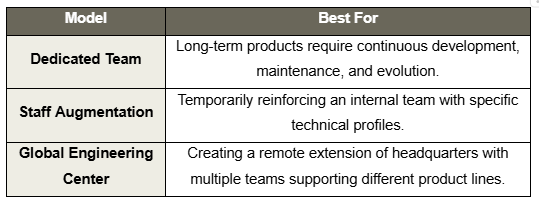
The best model depends on project scope, duration, and the client’s ability to manage day-to-day coordination.
3. Define Roles and Responsibilities
A well-structured offshore team should mirror the internal team. Typical roles include Product Owner, Tech Lead, Backend Developers, Frontend Developers, QA Engineers, DevOps Engineers, Cloud Engineers, and UX/UI Designers when needed.
Each role should have clear expectations related to progress, code quality, decision-making, and delivery. It should also be clear who owns architectural decisions, validates requirements, and approves releases (Innowise).
4. Integrate the Offshore Team with the Internal Team
One common mistake is treating the offshore team as an isolated “sandbox.” For the model to work, offshore professionals should participate in planning, refinement, and retrospective meetings. They should also have access to the product roadmap, business priorities, and a clear point of contact, such as a Product Owner or Engineering Manager.
Integration works best when offshore professionals feel like part of the project, not just task executors.
Communication and Remote Work Management
1. Establish a Communication Rhythm
The time difference between the U.S. and LATAM is usually only one to three hours, which makes collaboration easier. Still, companies need a clear communication structure.
This may include short daily standups, sprint planning, weekly status meetings, and bi-monthly retrospectives. The goal is not to overload calendars, but to create predictable alignment between the offshore team and the business.
2. Use the Right Collaboration Tools
Successful offshore teams rely on shared digital environments:
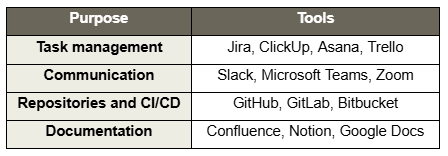
Everyone should work within the same environments and have secure but sufficient access to operate independently.
3. Maintain Transparency
Transparency builds trust. Offshore teams should track tasks, estimates, and progress visibly. They should also share regular updates on progress, incidents, risks, and blockers.
Simple dashboards, such as burn-down charts and bug tracking reports, help internal stakeholders understand what is happening and make better decisions faster.
Managing Quality, Risk, and Culture
1. Maintain Strong Code Quality Standards
Offshore teams should follow the same standards as internal engineering teams. This includes coding conventions, architecture guidelines, unit and integration testing, mandatory code reviews, and automated deployment processes.
Documenting these standards — and using market resources such as Interfell’s Smart Hiring 2027 Salary Guide for Latin America — helps companies hire professionals with the right expertise for each role.
2. Manage Risks and Dependencies
The most common risks include overdependence on a few key individuals, unclear requirements, and lack of visibility into progress.
These risks can be reduced by sharing knowledge across the team, documenting key decisions, and clearly defining priorities, ownership, and scope changes.
3. Build a Strong Work Culture
Culture is not limited to occasional team-building activities. It directly affects quality, motivation, and retention.
Regular feedback sessions, recognition of achievements, mentoring, certifications, and challenging projects help offshore professionals stay engaged and perform at a higher level.
Concrete Benefits for U.S. Companies
When properly designed and managed, offshore development teams provide U.S. companies with specialized talent, faster onboarding, reduced time to market, operational flexibility, and business continuity.
These advantages are especially valuable for startups, scale-ups, and companies looking to test products, adopt new technologies, or modernize legacy systems without dramatically expanding their internal structure.
Final Thoughts
Building and managing an offshore development team is not just about reducing costs. It is about creating a collaboration model that delivers real business value.
Success depends on clear objectives, effective team structure, sustainable communication, strong quality standards, and a culture where offshore professionals feel fully integrated into the project.
With more than a decade of experience across LATAM, Spain, and the United States, Interfell shows how strategic partners, salary intelligence, and AI-based evaluation tools such as SPK — Simera Professional Key, developed by Simera, can help companies accelerate hiring decisions and reduce talent selection risks.
Wouldn’t it make more sense to design your next offshore development team using market insights, data, and technology instead of relying on guesswork for every hire?
Contact Interfell today and discover how to build and manage offshore development teams that truly feel like an extension of your engineering organization.
FAQs
1. What is the difference between offshore and nearshore development?
Offshore development involves hiring teams in distant countries, while nearshore development refers to outsourcing to nearby countries with similar time zones and cultural alignment. For U.S. companies, LATAM often combines both advantages.
2. Why do U.S. companies hire offshore development teams?
Companies use offshore teams to access specialized talent, reduce operational costs, accelerate product delivery, and scale engineering capabilities more efficiently.
3. Is offshore software development cost-effective?
Yes. Offshore development can significantly reduce hiring, infrastructure, and operational costs while maintaining high technical quality.
4. How can companies successfully manage offshore teams?
Success depends on clear communication, strong project management, transparent workflows, quality standards, and proper integration with internal teams.
5. What are the biggest risks of offshore development?
Common risks include communication gaps, unclear requirements, overdependence on key individuals, and lack of visibility into project progress.
6. Why is LATAM a popular region for offshore development?
LATAM offers time zone compatibility with the U.S., cultural affinity, strong technical talent, and competitive pricing compared to local hiring.
7. What tools are commonly used to manage offshore development teams?
Popular tools include Jira, ClickUp, Slack, Zoom, GitHub, GitLab, Notion, and Confluence.
Quick Glossary
- Offshore Development: Hiring software development teams located in another country.
- Nearshoring: Outsourcing to nearby countries with similar time zones.
- Staff Augmentation: Adding external professionals to an internal team temporarily.
- Dedicated Team: A fully assigned external team working exclusively for one client.
- DevOps: Practices that combine software development and IT operations.
- CI/CD: Continuous Integration and Continuous Deployment processes.
- Sprint Planning: Agile meeting where teams organize upcoming work.